


Decentralised Finance (DeFi) vs Centralised Finance (CeFi)
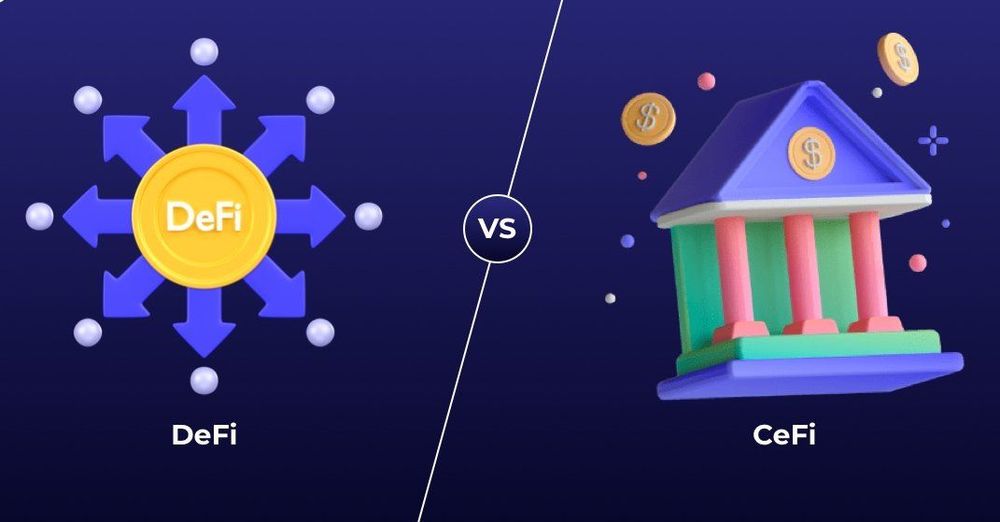
Global finance is evolving, and institutional investors are increasingly looking at exploring cryptocurrency-based systems to diversify portfolios, strengthen efficiency, and enhance returns.
Decentralised Finance (DeFi) and Centralised Finance (CeFi) dominate this space today. While both have matured, each serves a very different.
This guide compares DeFi and CeFi for institutional investors, focusing on the three most important dimensions of digital asset management: security, liquidity, and compliance. You’ll understand where each model stands and how platforms like Giottus can offer a regulated pathway into crypto.
Understanding DeFi and CeFi
DeFi is built on public blockchains such as Ethereum, Solana, and Polygon. It operates without intermediaries, relying on smart contracts to manage lending, borrowing, trading, and yield farming. Its strengths lie in transparency, permissionless access, and user autonomy.
On the other hand, Cefi involves centralised platforms that function as trusted intermediaries. They manage funds, provide custody, and simplify compliance for users. In India, Giottus has become a leading example of a CeFi exchange offering robust security protocols, regulatory alignment, and investor protection.
For institutions, the choice between the two depends on risk appetite, portfolio goals, and operational capacity.
Now. Let's compare them more closely.
1. Security: Safeguarding Institutional Assets
DeFi Security
DeFi offers autonomy but comes with unique risks.
- Smart Contract Vulnerabilities: Even audited platforms face risks. The $50 million exploit of a smaller protocol in mid-2025 highlighted that code flaws remain a real concern.
- Self-Custody: Institutions control their own wallets and private keys, which provides freedom but it also requires strong in-house cybersecurity.
- Transparency: Open-source code enables community oversight but it also gives malicious actors visibility into potential weaknesses.
Pros: Full control of assets, no central custodian.
Cons: Smart contract risks, technical expertise required.
CeFi Security
Centralised platforms centralise custody, but they compensate with structured safeguards.
- Institutional-Grade Protection: Advanced systems like cold storage, two-factor authentication, and insured custody have become standard.
- Single Point of Failure: Centralised servers remain attractive targets, but top-tier exchanges have invested heavily in strengthening defences.
- Giottus Advantage: Giottus provides robust security protocols, regulatory compliance, and full KYC checks for investors in India. This framework makes it especially attractive for businesses and large investors who prioritise safety and transparency over full decentralisation.
Pros: User-friendly security, insurance-backed protection.
Cons: Dependence on platform integrity, less personal control.
Verdict: DeFi works best for risk-tolerant institutions with technical depth, while CeFi, particularly with regulated players like Giottus, provides peace of mind for those prioritising asset safety.
2. Liquidity: Ensuring Scalability and Efficiency
DeFi Liquidity
DeFi has grown substantially, with global Total Value Locked (TVL) crossing $250 billion as of today.
- Automated Market Makers (AMMs): Protocols such as Uniswap offer decentralised pools, providing liquidity for diverse tokens.
- Fragmentation Issues: Liquidity often spreads across multiple chains, creating challenges for executing large orders without slippage.
- Yield Potential: DeFi remains attractive for yield farming, with stablecoin returns ranging from 5–20%, though active oversight is essential.
Pros: Permissionless access, high-yield opportunities.
Cons: Slippage in large trades, fragmented liquidity.
CeFi Liquidity
CeFi platforms dominate when it comes to institutional-grade liquidity.
- High-Volume Support: Centralised exchanges process billions in daily trades, ensuring scalability and minimal slippage for large orders.
- Fiat Integration: In India, Giottus offers seamless INR-to-crypto gateways, a crucial advantage for institutions managing both traditional and digital assets.
- Advanced Trading Tools: Order books, futures, and hedging features make CeFi practical for large-scale strategies.
Pros: Deep liquidity, sophisticated trading features.
Cons: Higher fees than DeFi, custodial risks.
Verdict: For high-volume and fiat-linked trades, CeFi delivers unmatched scalability. DeFi, by contrast, is better suited for yield-focused or smaller-scale strategies.
3. Compliance: Navigating Regulatory Requirements
DeFi Compliance
DeFi continues to face regulatory ambiguity in India.
- Unclear Oversight : While the Prevention of Money Laundering Act (PMLA) governs crypto intermediaries, DeFi protocols remain outside direct supervision.
- Tax Burden: All gains are taxed at 30% plus cess, while transactions above ₹50,000 trigger 1% TDS. Institutions must handle complex reporting manually.
- Global Pressure: FATF guidelines now encourage DeFi protocols to adopt optional KYC features, though uptake remains uneven.
Pros: Global reach, privacy for users.
Cons: Manual reporting, uncertain regulatory future.
CeFi Compliance
CeFi aligns closely with India’s regulatory environment, making it easier for institutions to remain compliant.
- Mandatory KYC/AML: Exchanges like Giottus require PAN and Aadhaar verification, ensuring strict adherence to PMLA standards.
- Simplified Reporting: CeFi platforms automatically deduct TDS and provide transaction histories, simplifying filings under ITR Schedule VDA.
- Regulatory Confidence: With its structured compliance, Giottus ensures institutional investors operate within a secure, transparent framework.
Pros: Clear legal standing, streamlined compliance.
Cons: Reduced privacy, potential account freezes if flagged.
Verdict: CeFi, particularly regulated exchanges such as Giottus, is the natural choice for institutions requiring legal certainty and ease of tax management.
Strategic Considerations for Institutional Investors
- Portfolio Goals: Use CeFi for large trades and fiat integration; leverage DeFi for yield farming or decentralised exposure.
- Risk Appetite: DeFi offers higher returns but greater technical risk; CeFi provides stability and oversight.
- Operational Capacity: DeFi requires blockchain expertise and in-house security teams; CeFi provides a plug-and-play option for firms with limited technical resources.
- Hybrid Approach: Many institutions combine both, staking assets in DeFi for yield while conducting large trades and compliance-heavy transactions through Giottus.
Conclusion: Choosing the Right Path in 2025
DeFi and CeFi are essential pillars of the digital asset ecosystem. DeFi delivers autonomy, transparency, and yield potential but requires technical sophistication and risk tolerance. CeFi, anchored by regulated platforms like Giottus, offers compliance, liquidity, and institutional-grade security.
For institutional investors, the best choice depends on goals, risk appetite, and operational strength. A hybrid model, using CeFi for scale and compliance while tapping DeFi for yield, often delivers the best balance.
Crypto is no longer fringe finance. For businesses and large-scale investors, platforms such as Giottus demonstrate that CeFi can bridge innovation and regulation, providing a secure entry point into one of the fastest-growing financial sectors in the world.
Disclaimer: Crypto products and NFTs are unregulated and can be highly risky. There may be no regulatory recourse for any loss from such transactions. Please do your own research before investing and seek independent legal/financial advice if you are unsure about the investments.
Updated on: 19th December, 2025 2:06 PM


FAQ's
1. What’s the difference between DeFi and CeFi?
DeFi uses smart contracts on blockchains with no central authority, while CeFi is managed by companies that control funds and services.
2. Should I use a centralized or decentralized crypto exchange?
Centralized exchanges are easier for beginners, while decentralized exchanges offer more control and privacy but require experience.
3. What are the 4 types of blockchain?
The four main types are public, private, consortium, and hybrid blockchains.
4. Is DeFi legal in India?
DeFi is not banned in India, but crypto-related activities are subject to taxation and regulatory uncertainty.


