


How to Buy Cryptocurrency with UPI: India's Fastest & Easiest Method
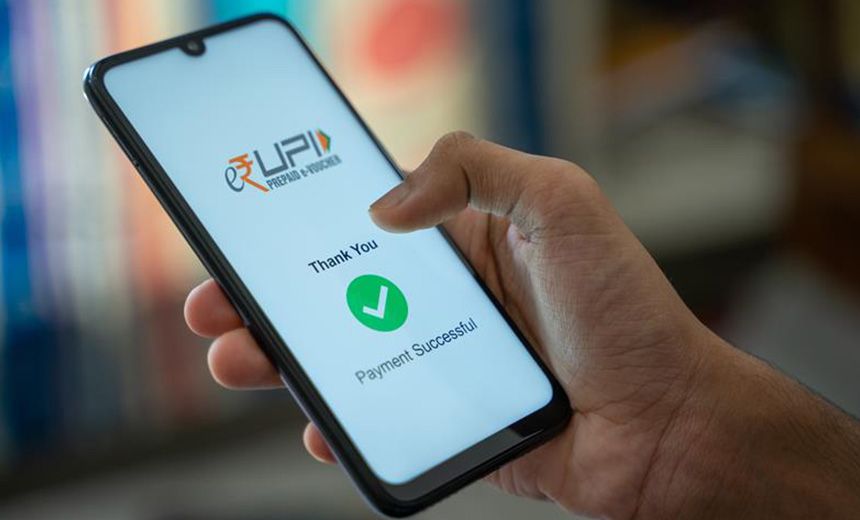
UPI has become India’s preferred payment method for everything from coffee to flights.
But here is what most people don’t realize: it is also one of the fastest and cheapest ways to buy cryptocurrency. In March 2026, over 60% of Giottus users now fund their accounts through UPI, a dramatic shift from just two years ago when bank transfers dominated.
This guide walks you through buying crypto with UPI, the fees you will pay, tax implications, and why this method has reshaped how Indians access digital assets.
Why UPI has become the gateway to crypto in India
UPI’s rise as a crypto funding method reflects how payment infrastructure shapes market access. Before UPI integration, buying crypto in India meant waiting 1-2 days for bank transfers to settle, explaining wire transfer quirks, and tolerating transaction limits. UPI changed that entirely.
The instant settlement system lets money move from your bank to Giottus within seconds, removing the friction that once discouraged first-time buyers. You don’t need a special bank account or corporate transfer codes. Just open your UPI app (Google Pay, PhonePe, BHIM, WhatsApp Pay), scan the QR code, and fund your account. The process takes less time than opening a traditional demat account.
From an accessibility perspective, this matters enormously in India’s context. A university student in Bangalore, a shop owner in Lucknow, and a farmer in Karnataka all have UPI access through their phones. Crypto exchanges previously relied on users understanding wire transfer terminology and having banking relationships with crypto-friendly banks. UPI erased that barrier entirely.
How to buy cryptocurrency with UPI on Giottus: Step-by-step
The process is designed to be intuitive, but walking through each step removes any confusion about security or account verification.
Step 1: Create and verify your Giottus account
Start by signing up at Giottus.com. You will need your email, a secure password, and a phone number for SMS verification. This takes two minutes. The second step is KYC (Know Your Customer) verification — an India regulatory requirement that also helps protect your account from unauthorized access.
Upload a clear image of your Aadhaar or PAN, a selfie (taken in good lighting), and confirm your address. Processing typically takes 1-2 hours, though verification can happen instantly if your documents are clear. This is a one-time process. Once approved, you won't need to repeat it for future deposits.
Why KYC matters: It ensures only you can withdraw from your account. If someone gains access to your Giottus login but lacks KYC approval, they can’t move money out. It is a security feature that protects your assets, not a bureaucratic hurdle.
Step 2: Navigate to the deposit section
Log in to your Giottus account. Click your profile icon (usually in the top right), then ‘Wallet’ or ‘Deposit Funds.’ You will see multiple funding options: UPI, Bank Transfer, and NEFT. Select UPI.
A screen will appear asking how much you want to deposit. Enter your desired amount in rupees. The minimum deposit on Giottus via UPI is ₹500. There is no per-transaction maximum, though individual UPI payment limits apply (most banks allow ₹1,00,000 per transaction; check your bank's app for your specific limit).
Step 3: Scan the UPI QR code or copy the UPI ID
Giottus presents two options. The QR code is fastest: open Google Pay or your preferred UPI app, tap ‘Scan QR,’ and point your phone at the screen. Alternatively, copy the Giottus UPI ID and paste it into your UPI app's "Send to" field.
You will notice a unique reference number appears in the deposit screen. This identifies your deposit. Your UPI app may ask you to confirm the merchant name (usually shown as "Giottus Cryptoexchange" or similar). This is normal and confirms you are sending money to the correct party.
Step 4: Complete the payment in your UPI app
Confirm the amount, and your UPI app will prompt you for authentication — either your phone's PIN, fingerprint, or face recognition, depending on which method you've enabled. This is your bank's security layer, not Giottus's. Complete the authentication.
Within seconds, you'll see a confirmation on your phone and a deposit notification on Giottus. The rupees appear in your INR wallet immediately. You're now ready to trade.
Step 5: Buy your first crypto
Navigate to the trade section and select the pair you want to buy. Bitcoin (BTC), Ethereum (ETH), and Tether (USDT) are the most popular, but Giottus offers Bitcoin, Ethereum, USDT, Cardano (ADA), Ripple (XRP), Solana (SOL), and 550+ other tokens.
Choose between a market order (buy at the current price immediately) or a limit order (set your desired price and wait for it to match). First-time buyers typically use market orders for simplicity. Enter the amount of INR you want to spend, review the fee (shown before you confirm), and execute the trade.
Your crypto now sits in your Giottus wallet. You can hold it, sell it, or transfer it to a hardware wallet for long-term storage.
Which cryptocurrencies can you buy with UPI on Giottus?
UPI funding can be used to buy any of Giottus’s 550+ listed tokens. The most accessible ones for first-time buyers are:
Bitcoin (BTC): The original cryptocurrency, a store of value similar to gold. Most liquid, highest trading volume. A good starting point for understanding crypto markets. Check BTC/INR live price on Giottus.
Ethereum (ETH): A blockchain that powers decentralized applications (dApps), DeFi protocols, and NFTs. More technically complex than Bitcoin but more versatile. Active developer community and real-world utility.
Tether (USDT): A stablecoin, meaning its value is fixed at ₹100 (approximately) through USD backing. Used as a bridge between fiat and crypto or held during market downturns for price stability.
Beyond these big three, popular options include Cardano (ADA) which is known for sustainability and academic development and Solana (SOL), which has gained traction for speed and lower fees. Which coin you buy depends entirely on your investment thesis, not on your payment method. UPI is simply the funding vehicle.
Fees and limits when using UPI for crypto purchases
Understanding the full cost matters. UPI buying comes with multiple layers of fees, and transparency here prevents surprises.
Giottus trading fees
When you execute a trade on Giottus, a small percentage is deducted. As of March 2026, Giottus charges:
— Maker fee: 0.1% (orders that provide liquidity to the market)
— Taker fee: 0.15% (orders that immediately buy/sell at market price)
For a beginner buying ₹10,000 worth of Bitcoin at market price, your trading fee is ₹15. This covers Giottus's operational costs and liquidity provision.
UPI transaction fees
Here is the good news: UPI transfers are free. Your bank doesn’t charge you for sending money via UPI, and Giottus doesn’t charge a deposit fee for UPI funding. This is one reason UPI has become so popular. It is one of the only completely free payment methods.
Compare this to older methods: bank NEFT transfers cost ₹2.50-₹10, PayTM charges 1%, and international wire transfers cost ₹100-₹500. UPI is genuinely cost-free.
1% TDS (Tax deducted at source)
This is where the tax code becomes relevant. India's Section 194S, introduced in July 2022, mandates a 1% Tax Deducted at Source (TDS) on cryptocurrency transactions for specified persons. TDS applies when you buy, sell, or transfer crypto if your annual crypto transaction value exceeds ₹10,000.
Here is what this means practically: If you buy ₹50,000 of Bitcoin, the exchange deducts ₹500 (1% of ₹50,000) and remits it to the tax authorities. This ₹500 is a credit against your income tax liability, you are not paying extra tax, just paying it earlier in the transaction rather than at tax filing time. Giottus automates this entirely; you don’t manually calculate or pay it yourself.
30% Capital gains tax
When you sell your crypto at a profit, that profit is taxed at 30% under Section 115BBH (introduced in 2024). This is a flat rate, regardless of your income tax bracket. A ₹10,000 profit becomes ₹7,000 after tax.
On top of that, a 4% health and education cess applies, bringing the effective rate to 31.2%. Losses cannot be set off against other income, crypto is treated as a separate asset class. If you make a ₹50,000 loss on one coin but a ₹100,000 profit on another, you can offset the loss against the gain (net ₹50,000 profit taxed at 30%), but you can’t reduce your salary tax with the crypto loss.
These rates apply equally whether you buy with UPI, bank transfer, or any other method. The payment mechanism doesn’t change tax treatment; the profit does.
India’s tax framework for cryptocurrency transactions
The tax landscape shifted significantly in 2024, and understanding it prevents unpleasant surprises at filing time.
The 30% flat tax regime
Before 2024, crypto was taxed under general income provisions, meaning your tax rate depended on your total income (10% for lower-income individuals, 30% for high earners, 42.5% for those in the highest bracket). This created unpredictability, two people with identical ₹50,000 profits could pay ₹5,000 or ₹21,250 depending on their overall income.
The current 30% flat rate (plus 4% cess, totaling 31.2%) actually benefits high-income earners who would have paid 42.5%. It harms lower-income individuals who would have paid 5-10%. The tax rate is now independent of income, a level playing field where everyone pays the same percentage.
TDS and your effective tax payment
The 1% TDS under Section 194S is a prepayment mechanism. Here is the math: If you make a ₹1,00,000 profit and sell at a 30% tax rate, you owe ₹30,000. But if you have been trading throughout the year, you have likely paid ₹500-₹2,000 in TDS already (1% of all transactions). This TDS is credited against your final ₹30,000 liability, reducing the amount you owe on filing.
Many people misunderstand TDS as extra tax. It is not. It is advance tax payment via your exchange, credited at filing time.
Annual reporting and documentation
You must report crypto transactions to the Income Tax Department. Giottus provides annual transaction reports (available in your account under Reports or Tax Documents) that list every buy, sell, and transfer with dates, amounts, and prices. Download this report, calculate your gains using your cost base, and file your ITR (Income Tax Return).
Specifically, Schedule FA (Foreign Assets) includes crypto under digital assets. You will need to declare the cost base, sale price, and capital gain/loss for each transaction. Giottus’s reports make this straightforward; they are formatted for ITR filing.
The RBI and SEBI are increasingly focused on crypto tax compliance. Giottus automatically reports TDS information to tax authorities under Section 194S. Filing your ITR completely and accurately protects you from scrutiny and potential penalties.
Security: Protecting your UPI and crypto assets
The faster and easier a payment method, the more important security becomes. UPI brings convenience, but security requires discipline.
UPI account security
Never share your UPI PIN. This is the fundamental rule. Your UPI app (Google Pay, PhonePe, BHIM) protects your pin, keep it private. It is not a password you share with anyone, including customer support or Giottus staff. Real institutions never ask for your pin.
Verify merchant names. When sending money via UPI QR or ID, your app displays the recipient's name. Before confirming, verify that it is ‘Giottus Crypto Exchange.’ This prevents misdirected payments.
Use verified QR codes only. When depositing on Giottus, only use the QR code or UPI ID displayed in your authenticated Giottus account. Don’t scan QR codes from emails, links, or unverified sources. A scammer could provide a QR code that sends your money to their account instead of Giottus.
Monitor your UPI transactions. Check your UPI app’s transaction history regularly. If you see unfamiliar payments, contact your bank immediately. Most banks reverse fraudulent UPI transfers if reported within 24 hours.
Giottus account security
Use a strong, unique password. Avoid birthdays, common words, or patterns. A strong password has uppercase, lowercase, numbers, and symbols. If you reuse this password on Gmail or other services and those accounts get compromised, hackers can access Giottus. Use a password manager if remembering multiple passwords feels impossible.
Enable two-factor authentication (2FA). Giottus supports both SMS-based 2FA and authenticator apps (Google Authenticator, Authy). Authenticator apps are more secure than SMS (which is vulnerable to SIM swapping), but SMS is better than no 2FA. Enable whichever is available; the minimal barrier to entry is worthwhile.
Never share your recovery codes or backup seeds. When you set up 2FA, you'll receive recovery codes. Store these somewhere very secure (a physical safe, a password manager's vault, not your notes app). If you lose access to your phone, these codes recover your account and anyone with them can too.
Log out on shared devices. If you access Giottus on a friend’s laptop or a cyber cafe, explicitly log out afterward. Don’t rely on the browser to auto-log you out. And never save your password in the browser on shared devices.
Verify announcements via official channels. Phishing emails impersonate Giottus claiming account verification is needed, or linking to fake login pages. Giottus never asks you to click links to verify your account in unsolicited emails. If you receive a suspicious email, go to giottus.com directly (don't click the email link), log in, and check your account status.
Storing your crypto securely
After buying crypto on Giottus, where should you hold it?
For amounts you actively trade (buying and selling frequently), keeping crypto on Giottus is acceptable. The exchange insures holdings under a digital asset insurance policy, and your funds are protected by their security infrastructure.
For amounts you are holding long-term (months or years), consider a hardware wallet (Ledger, Trezor) or a secure self-custody solution. Hardware wallets are physical devices that store your private keys offline, making them immune to exchange hacks. You hold the seed phrase (12-24 words) that recovers your wallet; as long as you don’t lose or share the seed phrase, your crypto is essentially irretrievable by anyone but you.
The tradeoff is convenience. Transferring crypto from Giottus to a hardware wallet involves a transaction fee (usually ₹50-₹500 depending on network congestion) and an extra step when you want to sell. Many investors use Giottus for trading and active management, and hardware wallets for a percentage they don't plan to touch for months.
UPI vs. other payment methods: A practical comparison
- UPI’s advantages: Instant settlement, zero fees, extremely convenient, lowest barrier to entry. A newcomer depositing ₹500 to experiment pays nothing and waits zero seconds.
- Bank transfer’s advantages: Higher daily limits, universally supported. If your UPI daily limit is exhausted and you want to deposit ₹5,00,000, bank transfer is your option. The ₹5-₹10 fee is negligible on large amounts.
For most users, UPI is simply the best option: fastest, free, and has the lowest friction to entry.
Common mistakes to avoid when buying crypto with UPI
Learning from others’ errors can save you money and stress.
Depositing before completing KYC. Some users try to buy crypto before verifying their account. Giottus allows KYC-unverified users to deposit (to encourage sign-up), but you cannot withdraw crypto or rupees without KYC approval. Complete KYC immediately after creating your account. It takes 1-2 hours and removes this friction entirely.
Ignoring market volatility and buying on emotion. A common trap: you read that Bitcoin is about to moon, deposit ₹50,000 immediately, and buy at the peak. Three months later, Bitcoin has dropped 30%, and you are down ₹15,000. UPI’s instant settlement means you can move on emotion without the friction that might have given you time to think. Set a buying plan in advance and stick to it, regardless of daily price movements. This avoids panic buying at peaks.
Forgetting about the 30% tax and planning withdrawals without a buffer. Suppose you buy ₹1,00,000 of Bitcoin and after 6 months you want to exit. The Bitcoin is now worth ₹1,50,000. Your profit is ₹50,000, and you owe 30% tax (₹15,000). You need to withdraw ₹1,35,000 to net ₹1,20,000 after tax. Many people forget this and assume their ₹50,000 profit is entirely theirs. Plan for tax from the start.
Using the same email for Giottus and other platforms. If your Gmail gets compromised, an attacker could reset your Giottus password. Use a unique email for Giottus, or at minimum, ensure your email account itself has strong password + 2FA protection. Email is the master key to all your accounts.
Transferring to an address you haven’t tested. If you are withdrawing Bitcoin from Giottus to a personal wallet, do a small test transfer first (₹1,000 worth). Confirm it arrives. Then transfer the rest. Mistyping a wallet address means your Bitcoin goes to that (possibly nonexistent) address forever which is irretrievable. A small test takes 10 minutes and prevents catastrophic loss.


Regulatory status and where it is headed
India's crypto regulatory landscape is in flux. Understanding the current status and future direction provides context for your investments.
Is crypto legal in India? Yes. The Supreme Court overturned the RBI’s 2018 banking ban in 2020 (in the landmark Crypto Citizens case), affirming that cryptocurrency trading is legal and citizens have the right to trade digital assets. You can legally buy, hold, and sell crypto in India without breaking any laws.
Giottus’s regulatory standing. Giottus is registered with FIU-IND (Financial Intelligence Unit — India) as a Virtual Digital Asset Service Provider (VDASP). This registration requires Giottus to comply with anti-money laundering (AML) rules, perform KYC verification, and report suspicious transactions. You are not trading on an unregulated platform; Giottus is formally recognized by India’s regulatory body.
What could change? The government has signaled interest in regulating crypto more formally. A crypto bill has been proposed (but not yet passed as of March 2026) that would formalize VDASP registration, establish regulatory authority, and clarify tax treatment. Additional scrutiny on crypto's environmental impact and financial stability implications is likely. What's unlikely: a blanket ban. The 2020 Supreme Court ruling makes bans legally untenable, and too many citizens and businesses rely on crypto for such a reversal to be feasible.
Tax law evolution. The 30% flat tax and 1% TDS are recent (2024). These could be adjusted, particularly if crypto adoption becomes mainstream and represents a significant portion of individual incomes. Monitoring RBI circulars and budget announcements each year is wise.
Conclusion
UPI has become the default payment method for buying crypto in India because it solves the fundamental problem that made crypto adoption difficult: friction. It is fast, free, secure, and universally accessible. Your investment timeline, tax strategy, and risk tolerance matter far more than the payment method you choose.
That said, understand the full picture before deploying capital. The 30% tax on gains, the 1% TDS on transactions, and the volatility of crypto prices are real considerations. But these apply whether you buy via UPI, bank transfer, or any other method. The UPI itself adds no friction to these realities — it simply removes friction from the deposit process.
For most Indians exploring crypto in 2026, UPI is simply the obvious choice. A complete beginner can create a Giottus account, complete KYC, deposit ₹1,000 via UPI, and own Bitcoin within 15 minutes, all for zero fees. Five years ago, this was impossible. The evolution of payment infrastructure and crypto accessibility is real, and UPI is its symbol in India.
Disclaimer: Crypto products and NFTs are unregulated and can be highly risky. There may be no regulatory recourse for any loss from such transactions. Please do your own research before investing and seek independent legal/financial advice if you are unsure about the investments.
Updated on: 12th May, 2026 1:59 PM


FAQ's
1. Can I buy crypto with UPI without a bank account?
No. UPI requires a bank account linked to your phone number. If you don't have a bank account, you'd need to open one first (which takes a few days). However, many fintech apps like PhonePe and Google Pay allow account opening within minutes, with minimal documentation. Once your account is linked to UPI, you can buy crypto.
2. Is it safe to buy crypto on Giottus via UPI?
Yes, as long as you follow security practices: use a strong unique password, enable 2FA, never share your UPI PIN, and verify QR codes before scanning. Giottus holds crypto in secure, insured wallets. Your UPI transaction is protected by your bank's fraud prevention. The risk isn't from Giottus or UPI; it's from user error (weak passwords, phishing) or volatility (buying at peaks).
3. How long does a UPI deposit take to show on Giottus?
Typically 5-30 seconds. Once you complete the payment in your UPI app and see confirmation, refresh your Giottus account. The rupees should appear in your INR wallet immediately. If it takes longer than 5 minutes, check that the merchant name matched Giottus (not a typo or phishing), and contact Giottus support with your UPI transaction reference number.
4. What's the minimum amount to buy crypto with UPI?
Giottus's minimum UPI deposit is ₹500. However, your bank's UPI limit applies. Most banks set ₹1,00,000 per transaction and ₹5,00,000 per day. If you want to deposit more than ₹1,00,000 at once, use bank transfer instead, or make multiple UPI deposits across days.
5. Do I pay taxes on UPI deposits, or only on selling crypto?
Taxes apply only to profits (when you sell for more than you paid). Depositing ₹50,000 and buying Bitcoin with it triggers a 1% TDS (₹500) that's credited at tax time, but this isn't "extra tax", it is advance payment. When you sell the Bitcoin, if you made a ₹20,000 profit, you owe 30% on that profit (₹6,000), and the ₹500 TDS is credited against this ₹6,000 liability.
6. Can I use someone else's bank account to deposit via UPI?
Technically, yes. You can send UPI money from any account. But for buying crypto, your Giottus account must be KYC-verified under your identity. If you deposit from someone else's account and Giottus suspects money laundering or fraud, your account could be frozen. Always deposit from your own bank account linked to your identity. If you want to gift someone crypto, buy it in your account and transfer the cryptocurrency (not rupees) to their address once they have a Giottus account.
7. What happens if my UPI transaction fails?
Your bank will reverse the payment within 5-7 days. You'll see the rupees back in your bank account. If Giottus mistakenly credits you (rare, but possible due to system lag), they'll reach out when the reversal hits. Never deposit twice if the first attempt shows as failed; wait 30 minutes and check your account, or contact support. Double deposits create reconciliation headaches.


