


What is Cardano? Ultimate Guide to Cardano for 2026
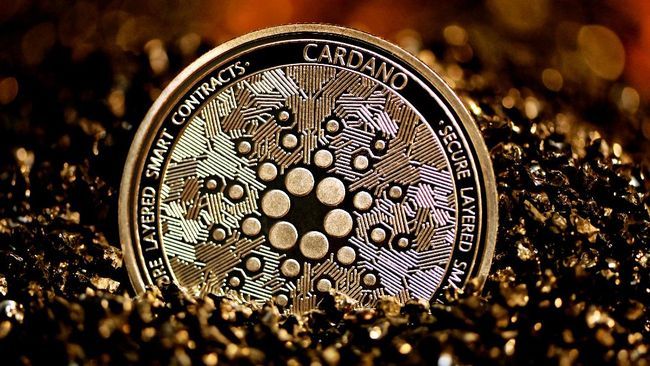
Cardano is often described as slow. That characterisation, while not entirely inaccurate, does not capture its design philosophy.
Yes, Cardano processes fewer transactions per second than some newer blockchains such as Solana. However, it is built on a framework of peer-reviewed research. Its consensus mechanism is designed to be energy-efficient, using significantly less energy than earlier Proof-of-Work systems.
This guide explains what Cardano is, how its native token ADA functions, and how it fits within the broader crypto ecosystem.
What is Cardano? A peer-reviewed blockchain
Most blockchain projects prioritise rapid development. Cardano followed a different approach.
It was founded in 2015 by Charles Hoskinson, with an emphasis on academic research and formal verification. Research papers are developed and reviewed before implementation.
Cardano is supported by three entities: the Cardano Foundation (governance), Input Output Global (development), and Emurgo (commercialisation). This structure separates responsibilities across the ecosystem.
The academic approach has resulted in slower rollout of features. However, it has also contributed to system stability and a measured development cycle.
ADA’s tokenomics: Why the supply model matters
ADA is the native token of the Cardano network. It is used for transaction fees, staking rewards, and smart contract execution.
The total supply of ADA is capped at 45 billion tokens, with a circulating supply of approximately 35 billion as of 2026. The remaining tokens are allocated for ecosystem development and staking incentives.
Unlike Bitcoin, ADA was not mined. The full supply was created at inception. This results in a predictable supply structure.
Staking rewards are distributed from the existing pool of tokens. Over time, as rewards reduce, participation dynamics may change.
Transaction fees are partially removed from circulation, which can create mild deflationary pressure depending on network usage.
Cardano’s price history — the 2021 cycle and after
Cardano saw a sharp rise during the 2021 market cycle. Prices increased from around ₹7 in early 2021 to above ₹70 by September 2021.
This was followed by a correction. Prices declined significantly, reflecting broader market conditions. By 2024–2025, ADA traded in the ₹30–₹40 range.
This pattern reflects the cyclical nature of crypto markets. Price movements are influenced by both technological developments and broader market sentiment.
Ouroboros vs proof of work — a different approach
Bitcoin operates on Proof of Work. Ethereum transitioned to Proof of Stake in 2022.
Cardano uses its own Proof-of-Stake protocol called Ouroboros.
In this system, validators—referred to as stake pool operators—are selected to produce blocks based on the amount of ADA they hold or are delegated. The process is energy-efficient and designed for decentralisation.
Unlike some systems, penalties for incorrect validation are limited. Validators who do not perform correctly typically forgo rewards rather than lose staked assets.
Ouroboros has been operational since 2017 without major disruptions.
Real-world activity on Cardano
Cardano’s ecosystem has expanded over time.
Decentralised exchanges such as Minswap and SundaeSwap enable token trading. Stablecoins such as DJED are being developed for payment use cases.
NFT issuance is natively supported, enabling digital asset creation without complex smart contracts.
There are also enterprise and public-sector experiments, including identity-related initiatives in select regions.
While the scale of activity remains lower than Ethereum, development activity continues.
Cardano vs Ethereum vs Solana
The three platforms reflect different priorities.
Cardano focuses on sustainability and formal development processes. Ethereum prioritises ecosystem depth and application development. Solana emphasises transaction speed and throughput.
None is uniformly superior. Each addresses different use cases and trade-offs.
Staking ADA — passive income mechanics
Cardano allows users to stake ADA without locking their assets.
Users can delegate tokens to a stake pool and earn rewards, typically in the range of 3.5%–5% annually, depending on network conditions.
The tokens remain in the user’s wallet and can be redeployed at any time.
Staking rewards are treated as income for tax purposes. Subsequent sale of tokens may attract capital gains tax, depending on holding period and applicable regulations.
How to buy ADA
ADA can be purchased on crypto exchanges that support INR deposits.
The process typically involves account registration, KYC verification, fund deposit, and order placement.
Users may choose to hold tokens on the exchange or transfer them to personal wallets for custody.
Conclusion
Cardano is designed as a research-driven blockchain with a focus on sustainability and long-term development.
It does not prioritise rapid expansion. Instead, it follows a structured approach to building infrastructure.
For investors, it represents one of several competing models in the crypto ecosystem, alongside platforms that prioritise speed or scale.
Cardano vs Ethereum vs Solana (comparison table)
Feature | Cardano (ADA) | Ethereum (ETH) | Solana (SOL)
|
|---|---|---|---|
| Founded | 2015 | 2015 | 2017 |
| Founder/Creator | Charles Hoskinson (IOHK) | Vitalik Buterin | Anatoly Yakovenko |
| Consensus Mechanism | Ouroboros (PoS variant) | Proof of Stake (PoS) | Proof of History (PoH) |
| Transaction Speed | 250 TPS (theoretical max ~10,000) | 12-15 seconds per block, ~1,500 TPS | 65,000+ TPS |
| Energy Use | Minimal (~99.9% less than Bitcoin) | Minimal (after PoS switch) | Low (PoH is efficient) |
| Total Supply | 45 billion ADA (fixed) | Unlimited ETH (no cap) | Unlimited SOL (no cap) |
| Circulating Supply (2026) | ~35 billion ADA | ~120 million ETH | ~420 million SOL |
| Smart Contracts | Yes (Plutus, Haskell-based) | Yes (Solidity) | Yes (Rust-based) |
| DeFi TVL (Locked Value) | ~$300M (growing) | ~$50B+ (dominant) | ~$8B (recovering) |
| Institutional Adoption | Growing (governments, enterprises) | Established (most major custodians) | Strong but recovering post-FTX |
| Development Philosophy | Academic rigor, peer-reviewed | Move fast, iterate | Speed over safety (historically) |
| Main Use Case | Smart contracts + Sustainability | DeFi, dApps, NFTs | Fast, cheap dApp execution |
Updated on: 15th April, 2026 3:12 PM


FAQ's
1. Is Cardano better than Ethereum?
Cardano and Ethereum serve different purposes. Ethereum has a larger ecosystem and higher adoption. Cardano emphasises a research-driven approach and energy efficiency.
2. Can staking generate returns?
Yes, staking yields are typically in the 3.5%–5% range annually, though actual returns depend on network participation and token price movements.
3. Why is Cardano slower than some networks?
Cardano prioritises decentralisation and security over maximum throughput. This results in lower transaction speeds compared to high-performance networks.
4. Is ADA a long-term investment?
This depends on individual risk tolerance and market outlook. Crypto assets remain volatile and subject to market cycles.
5. What is the difference between delegation and lock-up?
Delegation in Cardano does not require locking tokens. Users retain control and can withdraw at any time.
6. How are staking rewards taxed?
Rewards are treated as income when received. Capital gains may apply when the asset is sold.


