


What is Dogecoin? A Complete Guide for Indian Investors (2026)
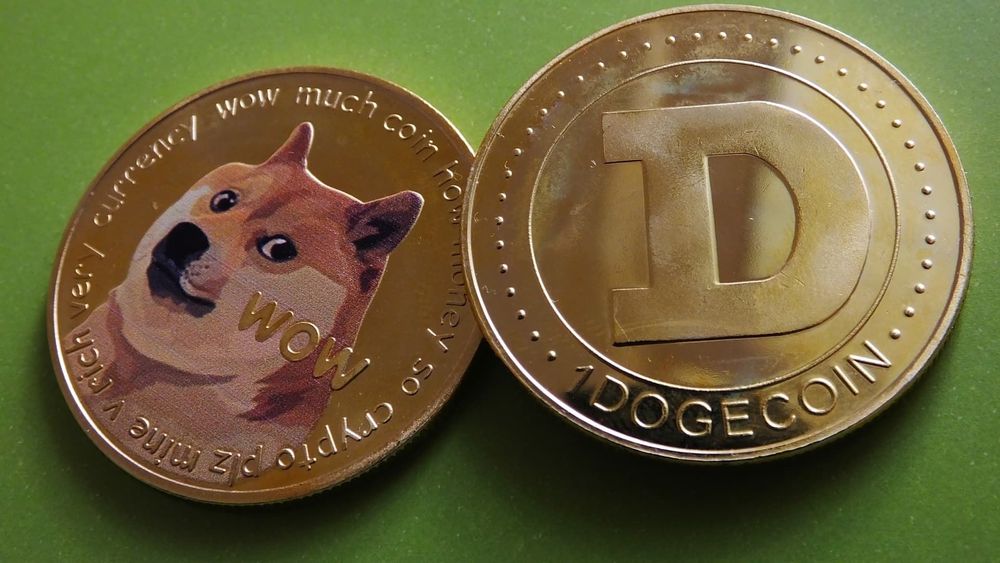
Dogecoin started as a joke in 2013. By 2021, its market cap was larger than that of many Fortune 500 companies. By 2026, it remains among the top 10 cryptocurrencies by trading volume globally. You might find it absurd, fascinating, or a mix of both. But it is still worth understanding what DOGE is and why it keeps surprising people.
What is Dogecoin?
Dogecoin (DOGE) is a proof-of-work cryptocurrency created in December 2013 by software engineers Billy Markus and Jackson Palmer. It was created as a parody of Bitcoin. It used the ‘Doge’ meme as its mascot. A Shiba Inu dog with broken English captions.
Unlike Bitcoin’s hard cap of 21 million coins, Dogecoin has no supply limit. Approximately 10,000 new DOGE are mined every minute, adding about 5 billion DOGE to the circulating supply each year. This inflationary design was intentional. Markus and Palmer wanted a coin that felt fun and abundant rather than scarce and precious.
What they didn’t expect was a community of millions. Celebrity endorsements also pushed the market cap by billions. It even found a real use case as a tipping currency for online creators. Dogecoin has outlived dozens of ‘serious’ cryptocurrency projects launched in the same era.
How Dogecoin Works Technically
Dogecoin is a fork of Litecoin, which itself is a fork of Bitcoin. It uses the Scrypt proof-of-work algorithm, which made it easier for GPU miners when it launched, instead of needing ASIC hardware like Bitcoin. Today, Dogecoin mining is mostly done by large mining operations, not individual miners.
Dogecoin transactions are faster, with blocks confirmed in about 1 minute compared to Bitcoin’s ~10 minutes. Fees are also very low, making it practical for small transactions.
In 2014, Dogecoin and Litecoin started merged mining. This means both coins can be mined at the same time, improving Dogecoin’s security without extra energy.
Price History — The Wild Ride of DOGE
Few assets in financial history have had a price trajectory quite like Dogecoin’s.
DOGE launched at effectively $0 and traded below $0.001 for most of its first four years. The first major price move came in January 2018. DOGE briefly touched $0.017 during the crypto bull market. That was a 17x gain, which felt huge at the time.
Then came 2021. Elon Musk began tweeting about Dogecoin in February, and the coin went from $0.007 to a peak of $0.73 in May, a 100x gain in four months. At that peak, the entire Dogecoin market cap exceeded $90 billion. The crash was equally dramatic, by January 2022, DOGE had fallen back to $0.15, and by the end of the 2022 bear market, it traded around $0.06.
The 2024-25 bull market brought renewed interest. Musk’s continued association with DOGE pushed prices back toward $0.40-$0.60 range during peak enthusiasm in late 2024.


Dogecoin in India — Tax Treatment and Exchange Access
DOGE is legal to buy and sell in India. It is classified as a virtual digital asset (VDA) under Indian tax law, which means:
Profits from selling DOGE are taxed at a flat 30% under Section 115BBH of the Income Tax Act, plus 4% health and education cess. The effective tax rate is 31.2%. Losses from DOGE cannot be offset against profits from other crypto assets or any other income. This is one of the most punishing aspects of India’s crypto tax regime and applies to all VDAs equally.
A 1% TDS is deducted at source on DOGE transactions under Section 194S when annual transactions exceed ₹10,000 (for specified persons) or ₹50,000 (for others). This TDS is deductible against your final tax bill, but it affects your cash flow.
DOGE/INR is directly available on Giottus, meaning you can buy DOGE with Indian Rupees via UPI or bank transfer without needing to first convert to USDT. Giottus is registered with FIU-IND, India’s Financial Intelligence Unit and complies with all applicable AML and KYC regulations.
What Drives Dogecoin's Price?
This is the most honest section of any DOGE guide, because the drivers are unusual compared to most assets.
Social media sentiment and celebrity influence: Elon Musk’s Twitter/X activity has single-handedly caused 20-30% price swings in DOGE multiple times. This is not speculation; it is documented market history. No other major cryptocurrency is as exposed to a single individual's social media activity. That is a genuine risk factor.
Retail trader enthusiasm: DOGE has a uniquely loyal and active community. The r/dogecoin subreddit has over 2 million members. Community-organized initiatives, including fundraising for the Jamaican bobsled team, a NASCAR sponsorship, and water projects in Kenya. This has kept DOGE culturally relevant in ways that purely financial projects never achieve.
Payment use cases: A small but real ecosystem of merchants accepts DOGE. As of 2025, some Tesla merchandise (for a period), certain GameStop products, and a range of online retailers have accepted DOGE payments. Whether this constitutes genuine utility or tokenism is debated, but it is more real-world adoption than most meme coins achieve.
Bitcoin correlation: Like all altcoins, DOGE broadly follows Bitcoin’s market cycles. Bull markets lift DOGE; bear markets sink it. DOGE is more sensitive to market moves than most assets. It often rises 3-4x more than Bitcoin in bull runs. It also falls more sharply during downturns.
Dogecoin vs Shiba Inu vs Bitcoin — Quick Comparison
Feature | Dogecoin (DOGE) | Shiba Inu (SHIB) | Bitcoin (BTC)
|
|---|---|---|---|
| Launch Year | 2013 | 2020 | 2009 |
| Supply Model | Inflationary (no cap) | Deflationary (burns) | Hard cap (21M) |
| Consensus | Proof of Work (Scrypt) | Proof of Stake (ETH) | Proof of Work (SHA-256) |
| Block Time | ~1 minute | ~12 seconds (ETH) | ~10 minutes |
| Primary Use Case | Tipping, payments, speculation | Meme, DeFi (ShibaSwap) | Store of value, payments |
| Market Cap Rank (2026) | Top 10 | Top 20 | #1 |
| Available on Giottus | Yes — DOGE/INR | Yes — SHIB/INR | Yes — BTC/INR |
Risks You Should Know Before Buying DOGE
Dogecoin's supporters are enthusiastic, but the risks deserve clear-eyed assessment:
Unlimited inflation: With 5 billion new DOGE entering circulation annually, long-term holders face constant dilution. DOGE needs sustained demand growth just to maintain its price. Any slowdown in interest pushes the price down against an ever-growing supply.
Concentration risk: A large portion of DOGE supply is held by a very small number of wallets. Whale movements can move the market quickly. Large holders buying or selling can cause big price swings. This can happen even without broader market changes.
Dependence on narrative: DOGE has no technical roadmap, a minimal DeFi ecosystem, and far less developer activity than Ethereum, Solana, or Cardano. Its value is almost entirely narrative-driven. Narratives can evaporate faster than technical fundamentals.
High volatility: 50% price drops in a week, followed by 100% gains the next, is documented DOGE history. If you invest in DOGE, size your position accordingly.
Disclaimer: Crypto products and NFTs are unregulated and can be highly risky. There may be no regulatory recourse for any loss from such transactions. Please do your own research before investing and seek independent legal/financial advice if you are unsure about the investments.
Updated on: 24th April, 2026 1:22 PM


FAQ's
1. Is Dogecoin a good investment?
Dogecoin has made big profits for some and big losses for others. It depends on when you buy and sell, and how much risk you can take. It is a high-risk asset in an already volatile market. Treat it as speculative. This is not financial advice.
2. Why does Elon Musk affect Dogecoin’s price so much?
Elon Musk has supported DOGE several times since 2019. He was also a major buyer during the 2021 bull run. His social media reach brings in retail trading activity. When he talks about DOGE, the market reacts. His influence is still there in 2026, but not as strong as before.
3. Can I buy a fractional amount of Dogecoin?
Yes, you can buy DOGE in small amounts. It is divisible up to 8 decimal places. You can even buy ₹100 worth on Giottus. You don’t need to buy a full coin.
4. How is Dogecoin taxed in India?
Profits from selling DOGE are taxed at 30% (plus 4% cess) under Section 115BBH. A 1% TDS applies to eligible transactions under Section 194S. Losses from DOGE cannot be offset against other income. Consult a tax professional for your specific filing situation.
5. What is the difference between Dogecoin and Shiba Inu?
Dogecoin is a Proof-of-Work blockchain created in 2013 with an inflationary supply. Shiba Inu is an ERC-20 token on Ethereum created in 2020 with deflationary mechanics (regular token burns) and a DeFi ecosystem (ShibaSwap). Both are meme coins, but DOGE has more mainstream recognition and payment acceptance; SHIB has more DeFi utility. Both are highly speculative assets.
6. What is the minimum investment in Dogecoin on Giottus?
You can start with as little as ₹100 on Giottus. DOGE's low per-coin price means ₹100 typically buys dozens to hundreds of DOGE, depending on the current rate.


