


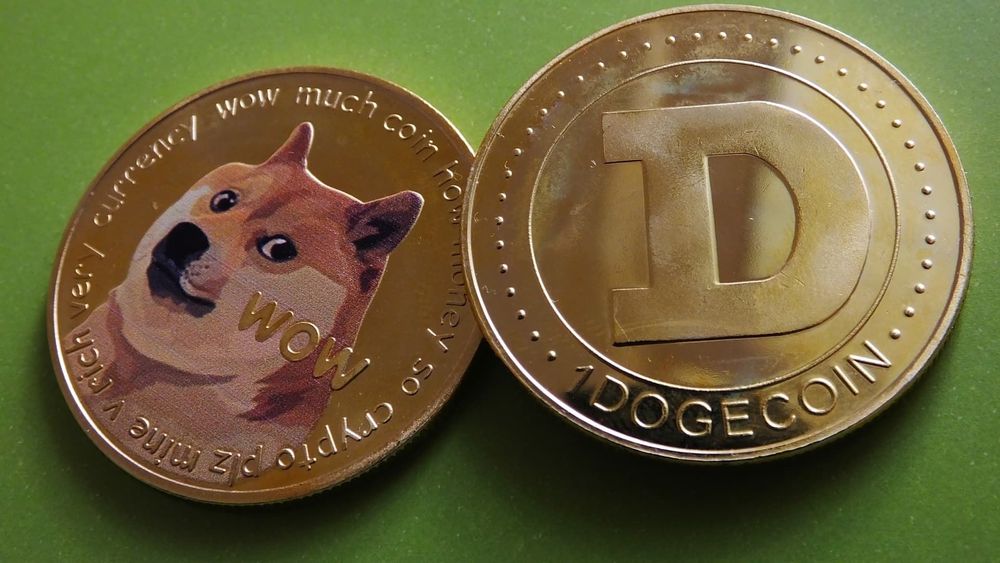
Dogecoin (DOGE) price history shows large swings driven by social media, high-profile endorsements, exchange listings, and shifts in crypto markets knowing this history helps beginners understand why DOGE moves so much and how traders interpret those moves.
Dogecoin (DOGE) Price History: Analysis & Historical Perspective
Introduce Dogecoin and its market presence
- Dogecoin is a meme-based cryptocurrency launched in 2013 and widely traded across major exchanges, with a long history of high volatility and large community-driven moves.
- Its market presence grew from a joke project to a top-ten crypto by market cap at multiple points, attracting retail traders and large social-media-driven liquidity spikes.
Why volatility matters
- Dogecoin has shown dramatic price swings, including an all-time high near $0.74 in May 2021 and an all-time low around $0.000085 in 2015, illustrating the wide range of possible returns and losses for traders.
- Understanding these past moves helps traders set risk limits, choose timeframes, and interpret signals from technical indicators and on-chain data.
Primary factors that influenced Dogecoin’s price (and how they affected price)
- Market sentiment: Social-media attention, especially from figures like Elon Musk, has repeatedly driven large short-term rallies and spikes in trading volume for Dogecoin.
- Regulatory actions: Broader regulatory news (for example, U.S. or global policy changes affecting crypto markets) has influenced DOGE as part of the overall market, causing correlated sell-offs or rallies with other major tokens.
- Technological updates: Dogecoin is a Litecoin fork with fewer planned protocol changes than some other chains; major protocol upgrades are rare and have historically had smaller impact than social or market events.
- Major ecosystem announcements: Exchange listings, merchant acceptances, or ETF-related flows have moved DOGE price when they increase access or demand—for example, listings on large exchanges or introduction of spot ETFs for crypto increased trading interest in late 2025.
How each factor impacted historical price action
- Social/media-driven demand often produced rapid price spikes and short-lived peaks (May 2021 rally being a prime example).
- Regulatory uncertainty or macro sell-offs compressed risk appetite and caused sharp drawdowns across crypto, which pulled DOGE lower along with Bitcoin and other tokens.
- Exchange listings and institutional products expanded liquidity and sometimes supported higher price floors when combined with bullish market sentiment.
Technical analysis and trader usage
- Short-term traders use chart patterns, moving averages, RSI (Relative Strength Index), and MACD (Moving Average Convergence Divergence) to spot momentum, entries, and exits on DOGE charts.
- Long-term traders watch multi-year support and resistance, moving average crossovers (e.g., 50-day vs 200-day), and on-chain metrics (supply concentration, active addresses) to assess trend strength and risk\.
- Technical tools often work together with news: a bullish chart formation may trigger larger moves if paired with positive news or social attention\.
- A one- to two-year DOGE price chart (Dec 2023–Dec 2025) would show: a multi-month recovery and spikes in 2024–2025 with notable volume increases in Q4 2024 and late 2025, and a price range roughly between $0.08–$0.32 during 2024–2025, with average trading around $0.13 by December 2025 according to major price aggregators.
- Major labeled milestones on that chart would include the May 2021 all-time high
($0.000085), and the late-2025 period of renewed interest tied to broader ETF and exchange activity.
Dogecoin (DOGE) Overview
Concise background
- Core purpose/vision: Dogecoin began as a light-hearted, low-fee peer-to-peer digital currency for tipping and micro-transactions rather than a platform for smart contracts or DeFi; it is not designed primarily for smart contracts or privacy features like some other networks.
- How the network operates: Dogecoin uses a proof-of-work consensus and was forked from Litecoin; it shares technical roots with Bitcoin-like mining but has a block reward schedule and parameters set at launch.
- Origins: Dogecoin was created by software engineers Billy Markus and Jackson Palmer and launched in December 2013 as a meme-based alternative to Bitcoin and Litecoin.
- Distinguishing features: Dogecoin’s meme branding, strong retail community, and focus on low-cost transfers set it apart from programmable-blockchain platforms like Ethereum.
- Key supply information: Dogecoin does not have a capped maximum supply; its supply increases each year through mining rewards (i.e., it is inflationary), and there is no regular burn mechanism in the protocol by default.
Tokenomics summary
- Launch year: 2013.
- Creators: Billy Markus and Jackson Palmer.
- Consensus: Proof-of-work (merged mining with Litecoin is possible historically; Dogecoin uses Scrypt-based mining like Litecoin).
- Max supply: No fixed maximum supply; inflationary issuance continues via block rewards.
- Circulating supply (Dec 2025 snapshot): Roughly 168 billion DOGE in circulation per major aggregators.
- Primary use case: Peer-to-peer payments, tipping, and community-driven projects rather than DeFi/smart contracts.
Understanding Dogecoin’s Historical Price Movements
Significant periods of volatility
- 2013–2014: Launch and early community growth with low prices and tiny market cap as DOGE gained usage for tipping.
- 2017–2018: Crypto bull market lifted many tokens including DOGE, followed by a long bear market in 2018–2019 when prices fell with the broader market.
- 2020–May 2021: Retail interest and high-profile social-media mentions, including by Elon Musk, helped push DOGE into a dramatic bull run peaking May 8, 2021 near $0.73.
- 2021–2022: After the 2021 peak, DOGE fell with broader crypto markets during 2021–2022, reflecting tightening macro conditions and reduced risk appetite.
- 2023–2025: Periodic rallies tied to social momentum, exchange activity, and late-2025 institutional flows (spot ETF-related interest) produced renewed trading activity and price recovery to the $0.12–$0.26 range at points in 2025.
Key bull runs and bear markets (with dates/prices)
- May 8, 2021: All-time high approximately $0.7376 during the 2021 meme-coin surge.
- 2015 (May): All-time low around $0.00008547 in early project years.
- Late 2024 – 2025: Multiple increases in trading volume and price, with daily prices in 2025 often ranging between roughly $0.14 and $0.26 depending on month; data sources record daily prices around $0.13 in December 2025.
Protocol events, listings, partnerships, and macro links
- Protocol upgrades: Dogecoin’s development pace is slower than many smart-contract platforms; major price moves typically aligned more with market sentiment and listings than protocol changes.
- Exchange listings: Listings on major exchanges historically broadened access and often preceded volume-led rallies; increased institutional products in late 2025 (spot ETFs for crypto baskets or related offerings) were cited as boosting demand in that period.
- Macro/regulatory events: General crypto market cycles (e.g., Bitcoin-driven rallies or macro tightening) had strong co-movement effects on DOGE price.
Timeline of critical events and price milestones
- Dec 2013: Dogecoin launched by Billy Markus and Jackson Palmer as a meme coin.
- 2015 (May): Historical low near $0.00008547.
- 2017–2018: Rise with crypto bull market, then fall in 2018 bear market.
- Jan–May 2021: Massive retail-driven rally; ATH ~ $0.7376 on May 8, 2021.
- 2022: Market-wide downturn and drawdown for DOGE alongside other cryptos.
- 2024–2025: Renewed interest and volume spikes from retail and institutional activity; late-2025 period saw spot ETF flows and higher exchange volume cited as catalysts.
Utility, features, and ecosystem effects
- Dogecoin’s core utility remains payments and tipping; attempts to expand utility (merchants accepting DOGE, community projects) drive short-term attention but have not transformed its role into a full smart-contract platform.
- Integrations (merchant payments, wallet support, exchange pairs) increase practical usability and can support price when combined with higher demand.
Recent Developments & Market Catalysts
Notable events in the past year (2024–late 2025)
- Spot ETF and institutional flows: Late-2025 introduction of spot crypto ETFs and related products boosted interest in altcoins and increased exchange trading volume, which was reported as supporting DOGE demand in that period.
- Exchange activity and listings: Renewed listings and higher volume across major platforms in 2025 increased liquidity for Dogecoin and coincided with price upticks during parts of the year.
- Social sentiment and trading spikes: Periodic surges in retail interest, often amplified on social platforms, produced sharp short-term volume and price moves throughout 2024–2025.
- Whale holdings and network metrics: Large transactions and concentration of supply in wallets can create volatility when those holders move coins; alerts of big transfers have sometimes preceded price swings.
How these shaped recent price and sentiment
- ETF and institutional product activity increased mainstream flows and media coverage, lifting trading volumes and improving access to DOGE for some investor groups in late 2025.
- Higher exchange volume and retail momentum produced more rapid intraday moves, making DOGE attractive for speculative traders while increasing short-term volatility.
- Social-driven narratives continue to be a key driver: tweets, community campaigns, and media stories still move sentiment strongly and quickly for Dogecoin.
Current state (network health, community sentiment, breadth of catalysts)
- Network health: Dogecoin remains an active, mineable proof-of-work chain with broad exchange support but a development roadmap focused less on smart contracts and more on community-driven use cases.
- Community sentiment: Strong retail community and meme-culture support persist, and sentiment spikes continue to cause price moves when combined with broader market liquidity.
- Recent catalysts: Access via exchanges and institutional products, social-media attention, and occasional merchant acceptance stories are the main catalysts shaping DOGE activity in the near term.
Introduction and live price snapshot
- Dogecoin is a widely known memecoin that remains among the top cryptocurrencies by market capitalization and is often used for tipping, small payments, and speculative trading.
- Current USD price estimates for 1 DOGE are roughly $0.129–$0.133 according to price feeds and converters.
- INR prices reported across major trackers are around ₹11.55–₹11.90 per DOGE depending on the data source and exchange.
- Reported 24‑hour trading volume has been large but variable; CoinGecko reported a 24‑hour DOGE volume in INR in the hundreds of billions on days of higher activity, reflecting strong on‑chain and exchange turnover at times.
- You can track the live Dogecoin (DOGE) price here. (Link the text “Live Dogecoin (DOGE) price” to the Giottus price page as requested.)
Recent price performance and market context
- Over the last week DOGE has shown small net declines versus earlier in the week according to several trackers that place 7‑day drops near single‑digit percentages.
- Different exchanges record slightly different levels (e.g., Coinbase, CoinMarketCap, local Indian exchanges), so INR quotes vary by platform and spread.
- Broader crypto market direction, US dollar strength, and macro risk sentiment have been the dominant forces moving altcoins including DOGE in recent months.
Dogecoin news this week and impact
- Key items affecting DOGE recently include continued retail interest, social media‑driven sentiment spikes, and occasional institutional commentary that temporarily lifts trading volumes.
- Regulatory updates in major markets and statements by prominent investors can cause short, sharp moves in price and volatility for memecoins like Dogecoin.
- When such events occur, they typically amplify volatility rather than change the long‑term fundamentals, since Dogecoin’s use cases remain mainly speculative and community driven.
Price prediction models & expert opinions
- Popular tools and methods used to form DOGE forecasts include technical models (moving averages, RSI, MACD), on‑chain metrics (active addresses, transfer volume), and sentiment or adoption indicators; classic stock‑to‑flow is not generally applied to DOGE because it is an inflationary coin without capped supply.
- Major exchanges and analytics platforms publish short‑term model outputs; for example Binance’s prediction tools project modest near‑term gains or sideways movement depending on model inputs.
- Individual analyst targets vary widely; short‑term forecasts often lie near current prices to modest upside (sub‑$0.20), while long‑range bullish voices cite broader adoption or speculative rallies as paths toward higher targets—these are opinion‑based and platform links (X handles or interviews) should be checked directly on each analyst’s posted thread or article for the original quotes.
Dogecoin technical analysis
- Current trend and structure: DOGE has traded in a relatively wide range over 2025 with repeated tests of short‑term support near the low‑teens INR (roughly $0.12–$0.14) and resistance at levels that have previously capped rallies.
- Moving averages: Many traders watch the 50, 100 and 200 EMAs; DOGE trading above a given EMA can be viewed as short‑term bullish, while a sustained move below the 200‑EMA would increase downside risk.
- Momentum indicators: MACD readings across exchanges recently show reduced bullish momentum after earlier rallies, with occasional signal‑line crossovers that produced short squeezes; RSI has oscillated between neutral and oversold during pullbacks, suggesting rallies can form if buyers return.
- Volume profile and support/resistance: High volume has typically clustered at prior swing highs and lows; near‑term support zones appear around the ₹10–₹12 range (≈$0.11–$0.13) while resistance sits at prior local peaks near ₹16–₹18 (≈$0.18–$0.20) on some platforms.
- Trading approach: For beginners, conservative strategies include waiting for clear confirmation (daily close above a key EMA with rising volume) or using small, disciplined allocations because DOGE is highly volatile and sensitive to news and social sentiment[.
- Overall technical view: The picture is neutral to cautiously bullish when DOGE stays above major short‑term EMAs with improving volume, but the coin remains vulnerable to broad market sell‑offs and negative headlines that can quickly reverse gains.
Short‑term technical outlook (daily, weekly, monthly) Daily
- Technical snapshot: intraday charts show price confined to a narrow band near the short‑term EMA with mixed candles and modest volume.
- Indicators: short‑term RSI near neutral and MACD close to a flat cross suggest limited directional momentum; immediate support lies near $0.12 (₹≈11), with resistance near $0.14 (₹≈12.5)[.
- Forecast range: Daily forecast: $0.118–$0.142 (≈₹10.6–₹12.7) assuming no major news shocks and typical market liquidity.
Weekly
- Technical snapshot: on the weekly chart DOGE has shown consolidation with the 50‑week EMA acting as dynamic support or resistance depending on price path.
- Indicators: a weekly close above the 50‑W EMA with rising volume would favor a move toward the $0.16–$0.20 zone; failure to hold support near $0.11 may open deeper pullbacks to sub‑$0.09 levels.
- Forecast range: Weekly forecast: $0.10–$0.18 (≈₹9–₹16) contingent on market breadth and macro news.
Monthly
- Technical snapshot: monthly momentum has been range‑bound with significant volatility spikes during market events; a sustained monthly close above key moving averages is needed to confirm a medium‑term bullish trend.
- Indicators: MACD on monthly charts turning positive and higher on‑chain activity would be constructive; otherwise the trend may remain sideways or drift lower during bear phases.
- Forecast range: Monthly forecast: $0.08–$0.25 (≈₹7–₹22), with the wide band reflecting high uncertainty and sensitivity to macro liquidity and sentiment.
Six‑month individual forecasts
- If the current month is December 2025, provide forecasts for Jan–Jun 2026 (each short paragraph based on historically observed seasonal behaviour and current technicals):
- Jan 2026: Likely consolidation after holiday trading; range $0.10–$0.16.
- Feb 2026: Potential recovery if markets stabilize; range $0.11–$0.18.
- Mar 2026: Event‑driven volatility possible; range $0.09–$0.20.
- Apr 2026: Gradual trend formation if adoption/news supports it; range $0.10–$0.22.
- May 2026: Macro factors (rate decisions, risk appetite) could dominate; range $0.08–$0.19.
- Jun 2026: Mid‑year re‑pricing based on market direction; range $0.07–$0.25.
- Historic note: DOGE historically moves strongly during speculative cycles and news events, but long stretches of sideways action are common between spikes.
Long‑term price forecasts (5+ years)
- 2026 : Dogecoin could see moderate appreciation if crypto adoption grows and speculative cycles return; typical expected ranges might be higher than 2025 averages but still limited by inflationary supply unless new use cases appear.
- 2030 : If mainstream crypto adoption expands and DOGE gains payment utility or tokenomics change, higher valuations become possible; otherwise, DOGE may track general altcoin performance without dramatic outperformance.
- 2040 & 2050 : Long‑term outcomes hinge on macro trends, regulatory frameworks, and whether DOGE secures ongoing real‑world use or remains a speculative store of value; predictions this far out are highly uncertain and should be treated as scenario sketches rather than forecasts.
Long‑term table (example ranges; update with live rates when publishing)
| Year | Scenario | USD Min | USD Avg | USD Max | INR Min | INR Avg | INR Max |
|---|---|---|---|---|---|---|---|
| 2026 | Bearish | $0.05 | $0.10 | $0.18 | ₹4.5 | ₹9.0 | ₹16.1 |
| 2030 | Average | $0.10 | $0.30 | $1.00 | ₹9.0 | ₹27.0 | ₹89.5 |
| 2040 | Bullish | $0.50 | $2.00 | $5.00 | ₹44.8 | ₹179.0 | ₹447.5 |
Key long‑term factors
- Supply/tokenomics: DOGE’s inflationary issuance makes sustained price increases dependent on strong demand growth rather than supply shocks.
- Adoption: merchant acceptance, developer activity, and real use cases would materially improve long‑term prospect.
- Regulation & macro: global crypto rules, interest rates, and risk appetite will dictate capital flows to speculative assets.
- Technology: upgrades or layer‑2 integrations that increase utility could help but are not guarantee.
Current Price Snapshot
- All price predictions are speculative and not financial advice; crypto markets are volatile and can move rapidly on news and sentiment[5][7].
- Do your own research, consider risk tolerance, and consult licensed professionals for investment decisions[5].
- Recent prices and key levels noted above (approx. $0.129–$0.133; ₹11.55–₹11.90) are based on multiple public trackers and should be cross‑checked with your exchange at the time of trading[4][1][9].
Follow the live Dogecoin (DOGE) price tracker above and check reputable exchange feeds and on‑chain analytics for real‑time updates before making any trading decisions.
Disclaimer:
Cryptocurrency investments are highly volatile and speculative. Past performance does not guarantee future results. Market conditions can change rapidly, and all price levels reflect data as of August 2025. Investors should conduct thorough research and assess their risk tolerance before investing. For real-time updates and live price tracking, monitor Bitcoin’s price on Giottus.


