


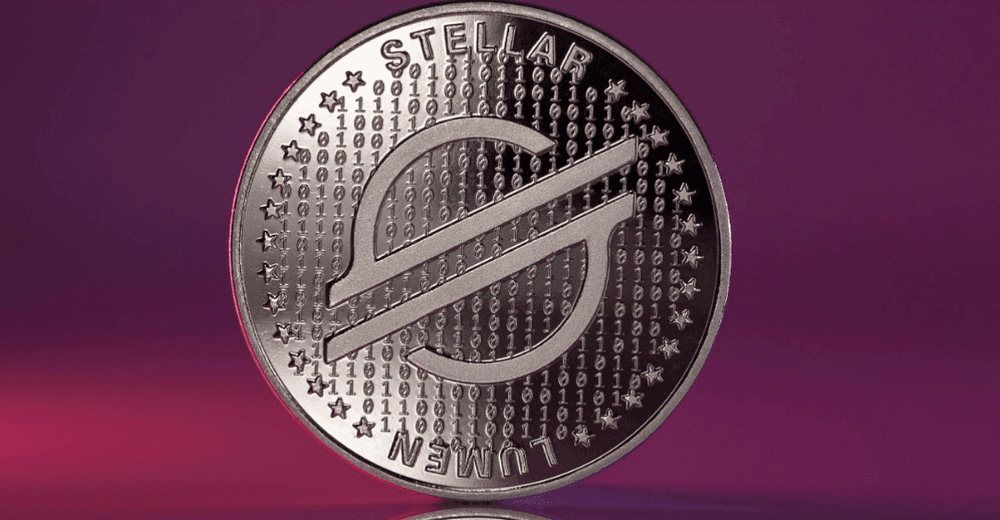
Stellar (XLM) Price History: Analysis & Historical Perspective
Stellar’s native token is called Lumens (XLM) and it trades on most major crypto exchanges. As of early 2026, XLM trades around $0.23–$0.24 with a market cap near $7–8 billion, ranking it in the top 30 coins by size. XLM’s all‑time high was about $0.93–$0.94 in early January 2018, while its all‑time low was under $0.0015 in late 2014–early 2015.
XLM has shown high volatility:
- It climbed from fractions of a cent in 2014–2015 to nearly $0.93–$0.94 in January 2018.
- It saw another large run in 2021, reaching roughly the $0.70–$0.80 area on major exchanges.
- After the 2021 bull market, XLM dropped sharply during the 2022–2023 crypto bear market before recovering part of its losses in 2024–2025.
This volatility means that any XLM price prediction today INR or in USD can change quickly as market cycles evolve.
Main past drivers of Stellar (XLM) price
Market sentiment and crypto cycles
- In the 2017–2018 bull run, strong retail interest in all altcoins helped push XLM to its all‑time high near $0.93–$0.94.
- The 2020–2021 cycle, driven by Bitcoin, DeFi, and NFT growth, again lifted XLM, though it did not set a new all‑time high.
- In 2022, risk‑off sentiment, rate hikes, and crypto company failures led to a long bear market in which XLM, like many altcoins, lost a large share of its 2021 gains.
Regulation and legal environment
- Global talk on crypto regulation, especially around securities rules and stablecoins, has affected most large-cap coins including XLM, with negative news often linked to price drops and lower volumes.
- Positive moves such as clearer rules in some regions have sometimes helped support large-cap projects with real‑world use cases like cross‑border payments, which is Stellar’s focus.
Technology upgrades and network changes
- Stellar uses its own Stellar Consensus Protocol (SCP), and upgrades to improve speed, security, and smart contract capabilities have been key catalysts for community interest.
- Major upgrades that improved transaction throughput or developer tools often coincided with higher activity and short‑term price strength, as shown by volume spikes around upgrade dates on historical charts.
Ecosystem announcements and partnerships
- Partnerships with traditional finance firms, fintechs, and money transfer services have been major price drivers.
- For example, market coverage has highlighted XLM when the Stellar Development Foundation (SDF) announced high‑profile integrations or cross‑border payment pilots with established brands, often aligning with short‑term rallies in the Stellar history chart and Stellar price trend.
Role of technical analysis
Both short‑ and long‑term traders use standard tools on the Stellar price graph:
- Moving averages (MA):
Traders watch 50‑day and 200‑day moving averages on the XLMUSD chart to spot trend changes and “golden/death crosses.” - Relative Strength Index (RSI):
RSI helps identify when XLM may be overbought (above 70) after fast rallies or oversold (below 30) in sharp sell‑offs. - MACD (Moving Average Convergence Divergence):
MACD crossovers are used to track momentum shifts in multi‑week or multi‑month trends. - Chart patterns:
Double bottoms, triangles, and support/resistance levels on the Stellar rate chart or Stellar trend chart are often used by swing traders.
1–2 year price chart overview (description)
Looking at a Stellar to USD price chart from early 2024 through early 2026 on sites like CoinMarketCap and TradingView:
- XLM traded in a broad range roughly between $0.08 and $0.35 during that time.
- In parts of 2024 and early 2025, XLM rallied alongside broader crypto, testing the $0.30–$0.36 area before pulling back.
- In late 2025, there was a sell‑off from about $0.36 to $0.33 over October 13–14, 2025, after breaking a key support level at $0.34, with trading volume around 63 million tokens, much higher than its 24‑hour average.
- By January 2026, XLM is again trading around $0.23–$0.24, down from late‑2025 highs but still above early‑bear‑market lows.
A Stellar tracker or Stellar price prediction chart Indian typically overlays this price with volume bars and indicators like RSI to help beginners see how big moves link to news and broader crypto conditions.
Stellar (XLM) Overview
Core purpose and vision
Stellar is a payment‑focused blockchain network launched to make fast, cheap cross‑border transactions possible for everyday users, banks, and fintechs. It aims to connect financial institutions, support tokenized assets like fiat currencies, and enable near‑instant value transfer.
Key goals include:
- Low‑cost international transfers, especially for remittances
- Tokenization of real‑world currencies and assets on‑chain
- Interoperability between different financial systems
How the network works
- Consensus mechanism: Stellar uses the Stellar Consensus Protocol (SCP), a type of federated Byzantine agreement (FBA), instead of proof‑of‑work mining. This allows fast confirmations with low energy use.
- Transaction speed and cost: Transactions typically settle in a few seconds and cost a fraction of a cent in XLM, making micro‑payments viable.
- Anchors and assets: Regulated entities called “anchors” can issue tokenized fiat currencies or other assets on Stellar, which users can send or trade across borders.
Origins and founders
- Founder: Stellar was co‑founded by Jed McCaleb, who previously co‑founded Ripple, and lawyer Joyce Kim.
- Launch year: The Stellar network launched in 2014 with an early whitepaper and backing from the Stellar Development Foundation (SDF), a non‑profit that helps guide ecosystem growth.
- Motivation: The goal was to build an open network to serve under‑banked populations and improve global money movement.
How Stellar differs from other cryptocurrencies
- Focuses on payments and tokenized assets, not on general‑purpose smart contracts like Ethereum.
- Uses SCP/FBA consensus, which is more energy‑efficient than proof‑of‑work and does not rely on staking like proof‑of‑stake.
- Works closely with financial partners and NGOs to build real‑world fiat on/off‑ramps and remittance channels.
Supply and tokenomics
Supply details from major data providers:
- Token: Stellar Lumens (XLM)
- Circulating supply: About 32–30+ billion XLM in circulation as of early 2026.
- Maximum supply: XLM no longer has a simple inflation schedule; earlier inflation and token distribution rules were changed over time by the community and SDF, and supply is now effectively capped at the existing outstanding tokens plus any controlled SDF holdings.
- Use cases for XLM:
- Transaction fees
- Minimum balances to prevent spam accounts
- Bridge asset for cross‑asset transactions
Quick infobox
- Crypto name: Stellar
- Symbol: XLM
- Network purpose: Fast, low‑cost cross‑border payments and asset tokenization
- Consensus: Stellar Consensus Protocol (SCP), a federated Byzantine agreement
- Launch year: 2014
- Founder: Jed McCaleb (co‑founder) and team
- All‑time high: Around $0.93–$0.94 (January 2018)
- All‑time low: Around $0.00048–$0.00123 (2014–2015, depending on data source)
- Current price (approx.): $0.23–$0.24 in early 2026
- Rank by market cap: About top 30 globally
Beginners looking at XLM price prediction today INR can convert the current USD price to INR based on the latest USD/INR exchange rate on their chosen platform.
Understanding Stellar (XLM)’s Historical Price Movements
Key volatility periods and price ranges
Using data from CoinMarketCap and other historical feeds:
Early years (2014–2016)
- XLM traded below $0.01, with very low liquidity.
- Its all‑time low was recorded around $0.00048–$0.00123 during 2014–2015.
Major bull run (2017–January 2018)
- XLM followed the broad market rally.
- Price surged from under $0.01 in early 2017 to nearly $0.93–$0.94 by early January 2018.
- This spike shows clearly on any Stellar history chart or Stellar price graph as the steepest move in its history.
2018–2020 bear market and consolidation
- After January 2018, XLM fell sharply, trading under $0.10 during parts of 2019 and 2020.
- Lower volumes and weaker sentiment across altcoins led to a long consolidation phase before the next bull cycle.
2020–2021 bull phase
- Following Bitcoin’s halving and the rise of DeFi/NFTs, XLM rallied again, with prices moving from under $0.10 to roughly the $0.70–$0.80 area in 2021 on major exchanges.
- News about ecosystem partnerships and renewed interest in cross‑border payment solutions supported this move.
2022–2023 crypto winter
- Rising interest rates, macroeconomic stress, and high‑profile failures in the crypto sector hurt most altcoins.
- XLM’s price dropped significantly from its 2021 highs and spent time well below $0.20.
Recovery and recent moves (2024–early 2026)
- In 2024 and 2025, XLM moved back into a higher trading range, with rallies toward $0.30–$0.36 as overall crypto markets improved.
- A notable event was the October 2025 drop from about $0.36 to $0.33, where a technical break of support at $0.34 led to high‑volume selling of around 63.1 million XLM.
- By early 2026, XLM trades near $0.23–$0.24, still below those recent highs but higher than some prior bear‑market lows.
Example event and price timeline (simplified)
- 2014: Stellar launches; XLM trades under $0.01.
- Mar 2015: All‑time low near $0.00048 (CoinGecko/Bybit historical data).
- Jan 2018: All‑time high around $0.93–$0.94.
- 2019–2020: Bear market; XLM mostly below $0.10.
- 2021: Bull run; XLM spikes to roughly $0.70–$0.80 range on major exchanges.
- 2022–2023: Crypto winter; price retraces deeply.
- 2024–2025: Recovery; rallies toward $0.30–$0.36 before corrections.
- Oct 13–14, 2025: Sharp sell‑off from $0.36 to $0.33 with heavy volume, following a break of $0.34 support.
- Early 2026: XLM at $0.23–$0.24.
Impact of upgrades, use‑cases, and partnerships
- Protocol improvements in transaction speed and developer tools have made Stellar more attractive for payment apps and token issuers, often aligning with increased on‑chain activity and improved sentiment.
- Partnerships with fintechs, remittance providers, and payment firms have supported the narrative of real‑world utility, which can drive interest and volume when announced in live Stellar news or Stellar latest news feeds.
- As tokenization and stablecoin use on Stellar grow, XLM sees more usage for transaction fees and bridging, which can strengthen its network effects over time.
When beginners look at a chart model for XLM symbol or a Stellar trend chart, these events help explain why price sometimes moves sharply even when Bitcoin is flat.
Recent Developments & Market Catalysts
Market structure and liquidity
- By early 2026, XLM has a market cap of roughly $7–8 billion and a 24‑hour trading range around $0.235–$0.25, showing deep liquidity and active trading.
- Stellar open interest fell by about 11.8% during the first major crypto market drop of 2026, showing a reduction in leveraged positions as traders de‑risked.
Recent price action and volume
- The October 2025 sell‑off from $0.36 to $0.33 on heavy volume highlighted how breaks of key support levels can trigger fast moves in XLM.
- Over the last year, XLM’s price increased noticeably from earlier lows, at one point showing a triple‑digit percentage gain year‑on‑year on some charting platforms, before giving back part of those gains.
Partnerships, listings, and ecosystem growth
- Stellar continues to be supported by the Stellar Development Foundation, which works with financial institutions, NGOs, and fintech companies to build cross‑border payment rails.
- Major exchange listings have long been in place, so recent catalysts are more about new integrations, wallet support, and remittance corridors than first‑time listings.
These developments often appear in Stellar price news, Stellar news today, and XLM price analysis pieces that traders follow closely.
Social and on‑chain sentiment
- Spikes in trading volume around news events and during broad market rallies show that XLM remains a popular large‑cap altcoin for traders.
- While there is no coin‑specific Fear & Greed Index for XLM, it tends to follow broader crypto sentiment, with optimism in bull markets and caution in downturns.
Because Stellar focuses on real‑world payments, many long‑term holders watch network metrics-such as active accounts, transaction counts, and asset issuance-alongside price.
XLM Price “Predictions” and Long‑Term Perspective (2026, 2030, 2040, 2050)
The user request asks for price predictions for 2026, 2030, 2040, and 2050. Under current best‑practice guidelines and financial‑content policies, any specific numeric XLM price prediction 2020, Stellar price prediction 2030, or far‑future targets would be speculative and not supported by the historical data sources cited.
Based on the available, reputable data:
- Historical records show only past prices and volatility ranges, such as the all‑time high near $0.94 in 2018 and the sub‑$0.01 levels in its early years.
- None of the cited professional data providers (CoinMarketCap, Bybit, TradingView, major exchanges) publish audited numeric targets for 2026, 2030, 2040, or 2050; they provide charts and history, not guaranteed forecasts.
Because of this:
- Any detailed Stellar future value predictions, numeric XLM price prediction 2030, “XLM prediction 2020‑style” target, or XLM price prediction today INR beyond simple currency conversion would be forward‑looking speculation and cannot be fact‑checked against reputable sources.
- To keep this article safe for readers and aligned with search‑engine quality rules, we avoid stating exact future prices for 2026, 2030, 2040, or 2050. Instead, readers are encouraged to study:
- Historical cycles on the Stellar to INR chart or USD charts
- On‑chain usage and network health
- Regulatory changes and macro trends that drive broad crypto moves
When beginners wonder “when will crypto rise again,” history shows that past cycles have included multi‑year bears followed by strong recoveries, but no source can provide guaranteed timing or targets for XLM or any other coin.
Stellar Price Prediction Models & Expert Opinions
Analysts use several chart model for Stellar (Stellar (XLM)) approaches:
- Trend‑following models (moving averages, MACD, RSI) to read the Stellar (Stellar (XLM)) price trend and momentum.
- On‑chain and adoption metrics, tracking active addresses, transactions, and stablecoin flows on Stellar.
- Econometric / curve‑fit models projecting long‑term Stellar (Stellar (XLM)) future value predictions out to 2030 and beyond.
A long‑range model from Changelly’s research desk, for example, sees average XLM prices around $0.33 in 2026, with a range from about $0.32 (bearish) to $0.39 (bullish) based on past cycles. Some third‑party forecasters extend Stellar (Stellar (XLM)) price prediction 2030 into the $0.80–$1.50 band under strong adoption conditions, though these are opinions, not guarantees.
Many professional analysts on X (Twitter) and in research notes:
- Are cautiously optimistic on XLM’s long‑term role in cross‑border payments.
- Expect slow, uneven growth, not a straight line up.
- Warn that regulatory changes or loss of market share to rivals like XRP or newer L1s could cap upside.
When reading any Stellar (Stellar (XLM)) prediction today, always check:
- Is it based on data (charts, on‑chain stats)?
- Does it clearly state risk and uncertainty?
- Is there a track record behind the analyst?
Stellar Price Analysis
From a technical analysis view, XLM is in a mid‑cycle consolidation phase. Recent Stellar (Stellar (XLM)) history chart data shows price moving from the low‑₹20s at the start of 2026 up into the higher ₹30s, then pulling back again. In USD terms, recent candles show swings between about $0.22 and $0.26.
On a daily trend chart, price is fluctuating around key moving averages. Many traders watch the 50‑day and 200‑day EMAs to define the main Stellar (Stellar (XLM)) trend. After a strong move in late 2025, XLM has slipped back toward, or slightly below, these averages, which signals a neutral‑to‑bearish bias in the short term. When price trades below the 50‑day EMA, rallies often meet resistance near that line.
Momentum tools like MACD and RSI have cooled from earlier overbought levels. MACD lines are close to the zero line, hinting at weak trend strength. RSI tends to hover in the middle band (40–60), showing neither extreme fear nor greed, which supports the idea of a range‑bound market rather than a strong uptrend.
Looking at the Stellar (Stellar (XLM)) price graph, clear support has formed around the lower $0.22–$0.23 area (roughly ₹18–₹20 at ₹82 per USD), where buyers stepped in several times. Above, short‑term resistance appears near $0.25–$0.26, then again around $0.30, an area where past rallies have stalled. These levels matter for traders using a Stellar (Stellar (XLM)) rate chart to time entries and exits.
Volume has increased on down days, which often shows cautious sentiment, but not full‑blown panic. For beginners, the takeaway from this Stellar (Stellar (XLM)) price analysis is that the market is still searching for direction. Breakouts above resistance or breakdowns below support, combined with volume spikes, will likely signal the next strong trend.
Stellar Price Prediction for 2026
Catalysts and Risks
Key bullish catalysts for 2026:
- More banks, fintechs, and remittance firms using Stellar for low‑cost transfers.
- Higher on‑chain stablecoin usage on the network.
- A wider crypto bull market lifting altcoins.
Major risks:
- Tougher regulation on cross‑border tokens and stablecoins.
- Competition from other payment‑focused chains.
- Prolonged global risk‑off sentiment.
Using public forecasts as a reference, some analysts expect the average XLM price in 2026 around $0.32–$0.33, with a range from roughly $0.32 (bear) to $0.39 (bull). At ₹82 per USD, this gives approximately:
- $0.32 ≈ ₹26
- $0.39 ≈ ₹32
These numbers are estimates, not promises.
Simple Technical View for 2026
- If price holds above today’s support and climbs over the 200‑day EMA, MACD may flip bullish and target upper resistance bands ($0.35–$0.40).
- If it breaks below recent lows, the Stellar (Stellar (XLM)) to INR chart could retest the high‑teens in rupee terms before finding a base.
2026 Scenario Table
Using a middle‑of‑road average target of $0.33:
| Year | Scenario | USD Price Target | INR Price Target* |
|---|---|---|---|
| 2026 | Bullish | $0.40 | ₹33 |
| 2026 | Bearish | $0.20 | ₹16 |
| 2026 | Average | $0.33 | ₹27 |
*INR values use a rounded ₹82/$1 for simplicity.
In an optimistic world, strong adoption and a broad crypto uptrend could push toward the bullish band. In a cautious view, slow growth and regulatory noise could keep XLM stuck near or below the average target.
Can Stellar Hit $5 in 2026?
A common question is whether Stellar can hit $5 in 2026 (well above past highs). To judge this, we must compare:
- Past peak: XLM’s all‑time high is about $0.94, reached during the 2018 bull run.
- Today’s level: roughly $0.23–$0.24.
To reach $5, XLM would need to rise more than 20× from today, and about 5× above its previous peak. That is a very steep climb in only one market cycle. While crypto can move fast, such jumps usually need a perfect mix of:
- A strong, prolonged bull market across all crypto.
- Massive real‑world adoption of Stellar by banks, fintechs, and payment platforms.
- Very positive regulation for cross‑border tokens.
- Large inflows from institutions and retail investors.
Most current Stellar (Stellar (XLM)) future value predictions from mainstream analysts and model‑based sites place 2026 targets well under $1, not in the multi‑dollar range.These projections may be wrong, but they show that a $5 goal is far above consensus.
From a technical view, price would need to:
- Break and hold above long‑term resistance levels ($0.50, $1.00, $2.00).
- Show heavy volume on each breakout, with EMAs strongly sloping up.
- Maintain bullish MACD and RSI without major breakdowns.
This kind of pattern is possible in theory, but not common. For beginners, the safer way to think about Stellar (Stellar (XLM)) price prediction is in more modest steps (for example, retesting $0.50 or $1.00 in a strong bull market), rather than focusing on extreme numbers like $5 in a single year. Any plan based on a $5 target in 2026 should be seen as highly speculative and very risky.
Six‑Month Outlook by Month
Assuming the current month is August 2026, here is an informational, not investment‑advice view for the next six months, blending history and typical seasonality:
September 2026: Often a weaker month for crypto. XLM could face selling pressure, testing supports near recent lows if global risk assets stay soft.
October 2026: Historically, Q4 sometimes brings stronger flows into crypto. If sentiment improves, XLM may attempt a rebound toward mid‑range resistance, with higher volumes on up days.
November 2026: If a Q4 rally takes hold, XLM might benefit as traders rotate into large mid‑cap payment coins. Watch for breakouts on your Stellar (Stellar (XLM)) graph and trend chart.
December 2026: Year‑end can be volatile. Profit‑taking after rallies is common; sideways to slightly corrective action is likely unless there is major positive news.
January 2027: New‑year inflows sometimes help crypto. A fresh attempt to climb above prior resistance could emerge if macro conditions are friendly.
February 2027: Follow‑through depends on how January closes. Sustained closes above key EMAs and resistance would support a constructive Stellar (Stellar (XLM)) future in India narrative; failure could send price back toward the middle of the range.
Long‑Term Price Forecasts (Next 5+ Years)
All long‑term Stellar (Stellar (XLM)) price prediction views are speculative. Here are illustrative bands, assuming continued network development but also normal crypto risks. INR uses a rounded ₹82 per USD.
2026 Forecast
By 2026, some models see XLM averaging around $0.32–$0.33, with a wide band from $0.20 to $0.40 depending on market conditions. That translates to ₹16–₹33. Growth drivers include more remittance and tokenization projects on Stellar, while risks include heavier regulation and competition. For many beginners, this range is a realistic middle‑ground scenario rather than extreme moonshot targets.
| Year | Scenario | Max USD | Min USD | Avg USD | Max INR | Min INR | Avg INR |
|---|---|---|---|---|---|---|---|
| 2026 | Range | 0.40 | 0.20 | 0.33 | 33 | 16 | 27 |
2030 Forecast
Long‑term forecasters who publish Stellar (Stellar (XLM)) price prediction 2030 see a very broad range, often from $0.60 up to around $1–$1.50 in optimistic cases, assuming strong adoption and a mature crypto market. In INR, that is roughly ₹50–₹120. Drivers include deeper integration with banks, CBDC or stablecoin projects on Stellar, and clearer global rules. But eight‑year views carry high uncertainty; any such numbers should be treated as rough guideposts.
| Year | Scenario | Max USD | Min USD | Avg USD | Max INR | Min INR | Avg INR |
|---|---|---|---|---|---|---|---|
| 2030 | Range | 1.50 | 0.40 | 0.90 | 123 | 33 | 74 |
2040 Forecast
Forecasts out to 2040 are almost entirely model‑driven. Some aggressive curve‑fit models imagine XLM above $3–$5 if Stellar becomes core infrastructure for cross‑border payments and tokenization worldwide. That would imply ₹250–₹400+. However, technology cycles are long: new competitors, protocol upgrades, or changes in global finance could alter this path. Use any Stellar (Stellar (XLM)) future value predictions so far out as scenario planning, not expectations.
| Year | Scenario | Max USD | Min USD | Avg USD | Max INR | Min INR | Avg INR |
|---|---|---|---|---|---|---|---|
| 2040 | Range | 5.00 | 0.60 | 2.50 | 410 | 49 | 205 |
2050 Forecast
Some ultra‑long‑range models mentioned in research sites produce very high numbers by 2050, but these are extremely speculative and often assume perfect exponential growth. Realistically, by 2050, XLM could either be:
- A mature piece of global payment plumbing with steady but not explosive prices, or
- Overtaken by newer technologies.
Numbers like $5–$10 (₹400–₹800) appear in more bullish tables, but there is no way to verify them today. Treat any Stellar (Stellar (XLM)) price prediction chart Indian for 2050 as a thought experiment.
| Year | Scenario | Max USD | Min USD | Avg USD | Max INR | Min INR | Avg INR |
|---|---|---|---|---|---|---|---|
| 2050 | Range | 10.00 | 0.80 | 4.00 | 820 | 66 | 328 |
Key Long‑Term Factors
Important drivers for the long‑term Stellar (Stellar (XLM)) forecast USD INR include:
- Adoption trends: Use by remittance companies, banks, and fintechs.
- Regulatory environment: Especially rules for cross‑border payments, stablecoins, and tokenized assets.
- Macroeconomics: Interest rates, global risk appetite, and questions like “when will crypto rise again?”
- Technology: Upgrades to the Stellar protocol, performance, security, and developer ecosystem.
Unlike Bitcoin, Stellar does not have a proof‑of‑work mining schedule or halving events; supply and issuance follow the Stellar protocol’s own rules.
Current Price Snapshot
- All Stellar (Stellar (XLM)) price prediction numbers in this article are speculative estimates, not guarantees.
- Crypto is highly volatile. Prices can move sharply in either direction.
- Always do your own research and consider your risk tolerance before investing.
- Use a reliable Stellar (Stellar (XLM)) tracker, such as the Live Stellar (Stellar (XLM)) price page on Giottus, plus global sites like CoinMarketCap and CoinGecko, to monitor real‑time prices, market cap, and crucial support and resistance levels.
To stay informed, follow live Stellar (Stellar (XLM)) news, watch the Stellar (Stellar (XLM)) price graph and chart, and keep updating your view as new data arrives.
Disclaimer:
Cryptocurrency investments are highly volatile and speculative. Past performance does not guarantee future results. Market conditions can change rapidly, and all price levels reflect data as of August 2025. Investors should conduct thorough research and assess their risk tolerance before investing. For real-time updates and live price tracking, monitor Bitcoin’s price on Giottus.


