


What is Ethereum? Guide for Indian Investors
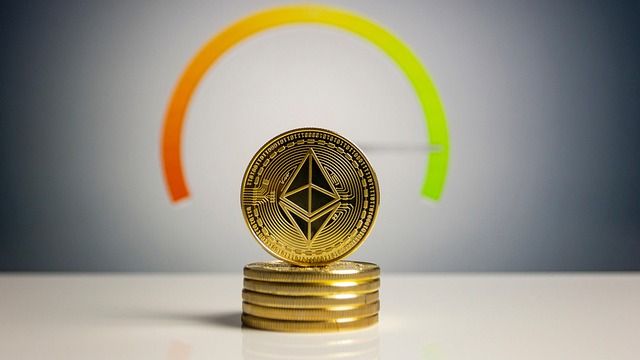
Ethereum explained: A clearer look at the world’s programmable blockchain
Bitcoin is often described as digital gold. Ethereum is different. It is a programmable blockchain that hosts thousands of applications.
Bitcoin moves value. Ethereum executes code. That distinction matters.
Terms such as smart contracts, DeFi, and NFTs are closely tied to Ethereum. Understanding Ethereum begins with understanding how it differs from Bitcoin.
Ethereum vs Bitcoin — the key difference
Both are blockchains. Both use cryptography. Both are decentralised. But they solve different problems.
Bitcoin functions as a ledger. It allows value to move from one person to another without a bank. Its design is intentionally narrow.
Ethereum functions as a computer. It allows users to run programs on a blockchain. Those programs execute as written, without downtime, censorship, or intermediaries.
How Ethereum works — smart contracts and the EVM
Ethereum’s core innovation is the Ethereum Virtual Machine, or EVM.
The EVM works like a global computer. Anyone can submit code to it. That code runs across thousands of machines at the same time. The network reaches consensus on the outcome. The result is then recorded permanently on the blockchain.
These programs are called smart contracts. They are self-executing agreements that do not require a human intermediary.
A simple example helps explain the idea.
Alice bets $100 that Bitcoin will reach $40,000 by March 2027. Bob takes the opposite view. On March 1, 2027, the smart contract checks the Bitcoin price through an oracle, which is an external data feed. The contract then releases the funds automatically to the winning party. No escrow service is required. No lawyer is involved. The contract holds the money and distributes it according to predefined rules.
This makes programmable finance possible. Financial products such as insurance, derivatives, and mortgages can be recreated through code and used without intermediaries.
What smart contracts power
DeFi (Decentralised Finance)
DeFi allows lending, borrowing, and trading without banks. Protocols such as Aave, Uniswap, and Curve manage tens of billions of dollars in value.
NFTs (Non-Fungible Tokens)
NFTs represent digital ownership. They can apply to art, collectibles, and gaming assets. Ethereum records and certifies ownership.
DAOs (Decentralised Autonomous Organisations)
DAOs are internet-native organisations governed by smart contracts instead of traditional boards or bylaws.
Stablecoins
Stablecoins such as USDC and USDT run on Ethereum. These assets are pegged to the US dollar. Billions of dollars in stablecoin value exist on the network.
All of this operates on a shared ledger. There is no fragmentation. There is one record of truth.
Gas fees and ETH
Transactions on Ethereum require gas fees, which are paid in ETH.
Gas is measured in Gwei, which represents billionths of an ETH. The fee depends on network demand.
During periods of low congestion, a simple ETH transfer may cost around 0.001 ETH. A more complex DeFi transaction may cost 0.01 ETH when activity on the network increases.
In August 2021, Ethereum introduced EIP-1559. This upgrade created a base-fee burn mechanism.
Part of every transaction fee is now destroyed permanently instead of being distributed to miners. This reduces circulating supply and may create long-term deflationary pressure on ETH.
ETH 2.0 — the move to proof of stake
Ethereum originally used Proof of Work, the same validation system as Bitcoin.
Under Proof of Work, miners competed to validate blocks. The process worked but required high energy consumption.
On September 15, 2022, Ethereum completed “The Merge.” This marked its transition from Proof of Work to Proof of Stake.
Proof of Work (PoW)
Miners solve mathematical problems to validate transactions. The winner receives a block reward. Hardware and electricity are central to the process.
Proof of Stake (PoS)
Validators lock ETH as collateral. The network randomly selects validators to propose blocks. Honest validators earn rewards. Dishonest behaviour can result in penalties known as slashing.
What The Merge delivered
- A 99.95% reduction in energy consumption, from roughly 112 TWh per year to about 0.55 TWh
- Faster block times of around 12 seconds instead of 15
- Lower fees in some periods, although congestion can still raise costs
- Staking rewards for ETH holders, typically around 3–4% APY
This transition changed Ethereum’s environmental profile.
Ethereum now uses electricity closer to that of a mid-sized data centre rather than the energy demand of a small country.
Investors who hold ETH on exchanges that support staking can earn yield while holding the asset. Staking returns currently hover around 3–4% APY.


What you can do with Ethereum
Ethereum’s ecosystem extends beyond simple ownership.
Hold ETH as an asset
ETH is the second-largest cryptocurrency by market capitalisation, valued globally at roughly ₹18–20 lakh crore.
Users can buy ETH through the ETH-INR trading pair on Giottus.
Bitcoin is often viewed as a store of value. Ethereum combines utility with scarcity.
Demand for ETH comes from transaction fees, network activity, and staking issuance.
Earn staking rewards
Holding 32 ETH, roughly valued at ₹70–75 lakh, allows a user to become a validator.
Validators currently earn around 3.5% APY.
Users holding smaller amounts can stake through exchanges or pooled services.
Trade tokens on Uniswap
Uniswap allows users to exchange ERC-20 tokens without a centralised exchange.
The protocol operates entirely through Ethereum-based code.
Lend through Aave
Users can deposit ETH into lending markets and earn interest.
Borrowers pay for access to those assets. Interest rates vary according to supply and demand.
Use stablecoins
USDC and USDT run on Ethereum.
They allow users to transfer dollar-linked value across borders within minutes. Traditional forex costs and banking delays can often be avoided.
These use cases are not native to Bitcoin. Bitcoin does not execute programmable contracts.
Ethereum does.
Also read: What is Ethereum? A Complete Guide for Indian Investors in 2026
Ethereum’s risks and limitations
Ethereum is not without risk.
Smart contract bugs
Smart contracts depend on code. Poorly written code can be exploited.
Billions of dollars have been lost through application-level hacks.
Ethereum’s base layer has remained secure, but applications built on it may contain vulnerabilities.
Regulatory uncertainty
Governments are still shaping rules around crypto and DeFi.
In India, the RBI has raised concerns around cryptocurrency. Policy continues to evolve.
Future regulations may affect demand, price, or adoption.
Volatility
ETH experiences significant price swings.
In 2022, ETH fell from around $3,000 to roughly $900.
Investors uncomfortable with a 50% decline during bear markets may find the asset difficult to hold.
Scalability limits
Ethereum processes roughly 15 transactions per second on-chain.
Bitcoin processes around 7.
Layer 2 solutions such as Arbitrum and Optimism attempt to improve speed, though they add complexity.
ETH inflation
Bitcoin has a fixed supply cap of 21 million coins.
ETH has no supply cap.
New ETH enters circulation through staking rewards. Annual issuance currently sits near 1.7%.
The fee-burning mechanism introduced through EIP-1559 partly offsets this issuance.
In some periods, more ETH has been burned than minted.
However, inflationary pressure remains a structural feature of Ethereum.
Execution risk
Ethereum is a complex technical system.
Upgrades may introduce bugs. Consensus failures remain theoretically possible, though considered low probability after more than 11 years of operation.
These are not necessarily reasons to avoid Ethereum. They are risks that investors should understand before participating.
The counter-narrative
Ethereum has operated for more than 11 years.
It remains one of the most widely used blockchains in the world, processing more than 1 million transactions each day.
Developers continue to build on it. Billions of dollars remain locked in DeFi protocols.
Its survival does not guarantee future success.
Ethereum could plateau. A stronger competitor could emerge. Regulation could slow adoption.
Investors should account for these possibilities when deciding how much exposure to hold.
Disclaimer: Crypto products and NFTs are unregulated and can be highly risky. There may be no regulatory recourse for any loss from such transactions. Please do your own research before investing and seek independent legal/financial advice if you are unsure about the investments.
Updated on: 29th April, 2026 2:16 PM


FAQ's
1. Is Ethereum safe to buy in India?
Ethereum is a blockchain technology rather than a regulated investment product. Buying ETH through a regulated exchange such as Giottus, which is FIU-IND registered, provides operational safeguards. The asset risk remains with the investor.
2. Will Ethereum replace Bitcoin?
No. Bitcoin and Ethereum serve different purposes. Bitcoin functions primarily as a store of value. Ethereum functions as a programmable platform. Many investors hold both.
3. What is the difference between ETH and ERC-20 tokens?
ETH is Ethereum’s native cryptocurrency. ERC-20 tokens such as USDC, USDT, and UNI run on top of Ethereum. ETH powers the network. ERC-20 tokens depend on that infrastructure.
4. Can staking lead to losses?
Yes. Validators who act dishonestly or operate incorrectly may face slashing penalties. Passive staking through exchanges carries lower risk, though exchange-level management risk remains.
5. Why does Ethereum use gas instead of a fixed fee?
Gas reflects the computational work required for a transaction. Simple actions consume less gas. Complex actions consume more. This creates a fee structure tied to actual network resources used.


